Proudly serving Phoenix, Scottsdale, Glendale, Peoria, Paradise Valley, Tempe & surrounding areasCall or Text 24/7: 480-264-8603
Aerial drone view of a suburban neighborhood and desert landscape with Saguaro cacti in Phoenix, AZ.

Electrical Repair, Troubleshooting & Wiring Diagnostics in Phoenix, AZ

Phoenix Electrician Co. provides electrical repair and troubleshooting for homes and businesses across Phoenix, AZ. Our work includes emergency electrician service, circuit breaker repair, panel upgrades, and outlet and switch installation. We also handle EV charger installation, lighting and ceiling fan installation, whole home rewiring, and commercial electrical services. Each visit is focused on finding the fault and matching the repair to the property's actual electrical load.

Summer heat that routinely pushes past 110 degrees keeps air-conditioning systems under heavy load and can expose weak breakers, loose connections, and aging wiring. Our crews use calibrated multimeters, thermal imaging cameras, and circuit tracers to diagnose the source instead of guessing which part to replace. Work follows National Electrical Code standards adopted by the City of Phoenix Development Services Department and Maricopa County. Our electricians are licensed through the Arizona Registrar of Contractors, and the company carries insurance coverage for work on your property.

When a job requires a permit, we pull it, coordinate the inspection, and explain the repair scope before work begins.

Phoenix Electrician Co. provides electrical repair and troubleshooting throughout Phoenix and nearby Scottsdale, Tempe, Glendale, Mesa, and Chandler.

★ ★ ★ ★ ★4.9/5 Average Rating · 20+ Years of Experience · Thousands of Customers Helped · Licensed & Insured · Residential & Commercial

Electrical Repair & Troubleshooting Benefits

What Is Electrical Troubleshooting?

Electrical troubleshooting is a step-by-step process for identifying whether a fault is in a breaker, wiring, connection, outlet, switch, fixture, or connected device. The goal is to isolate the cause before recommending a repair.

Phoenix homes built in the 1970s and 1980s may still have original panels and wiring carrying loads that were not anticipated when the systems were installed. Tripped breakers, warm outlet covers, humming switches, and outlets that spark under load can all point to different causes.

We begin with the reported symptoms, isolate the affected circuit, and inspect connections at the panel, junction boxes, and devices. Testing under load helps distinguish an overload from a short circuit, ground fault, loose neutral, or failed component.

Benefits of Root-Cause Electrical Repair

A measured diagnosis helps direct the repair toward the real fault while keeping safety, load requirements, and code compliance in view.

  • Isolates the affected circuit before parts are replaced
  • Checks wiring, devices, breakers, and panel connections
  • Uses thermal imaging to identify abnormal heat
  • Tests voltage and circuit behavior under load
  • Matches replacement breakers to the existing panel
  • Explains the repair scope and price before work starts
  • Coordinates permits and inspections when required
  • Verifies the repaired circuit before returning it to service
Phoenix Electrical Services

Electrical Repair & Troubleshooting Services

From intermittent faults to urgent safety hazards, our services cover diagnosis, targeted repairs, capacity upgrades, device installation, and documented inspections for Phoenix homes and commercial properties.

Electrical Repair & Troubleshooting

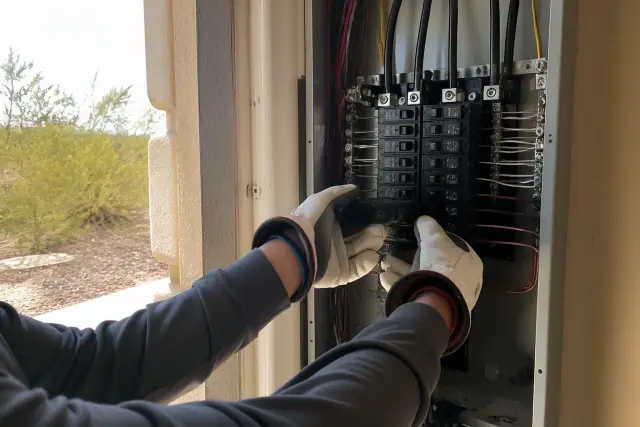
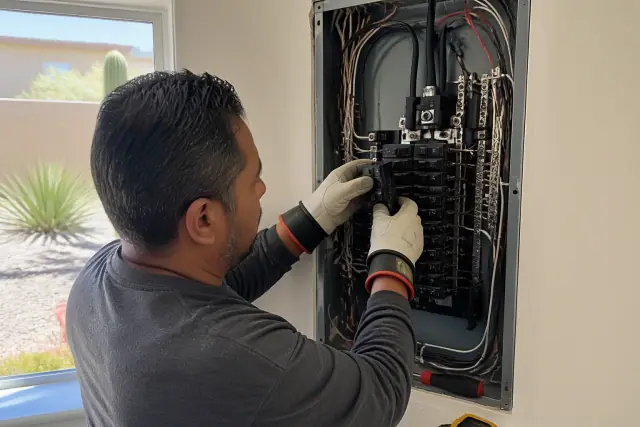
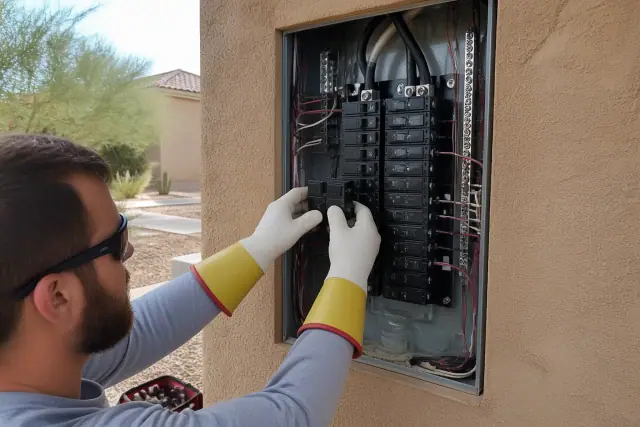
Electrician wearing gloves installing a circuit breaker in a residential service panel in Phoenix, AZ.

We diagnose loose outlets, humming switches, intermittent faults, hidden wiring problems, and circuits that fail only under load. Phoenix service calls typically run $75 to $150 and are usually credited toward approved repairs; simple outlet or switch fixes generally cost $150 to $300, while complex tracing can run $300 to $800.

Request Estimate

Emergency Electrician Service

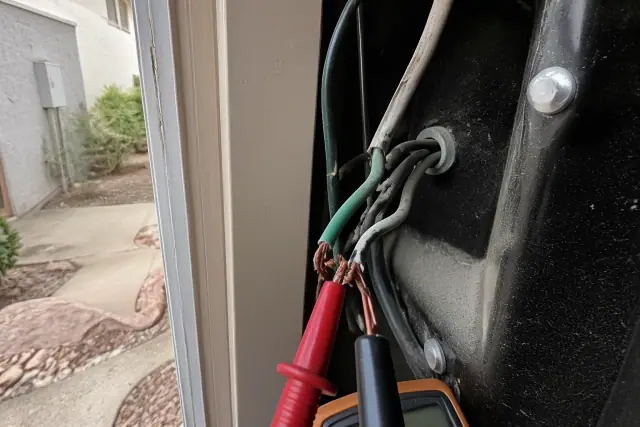
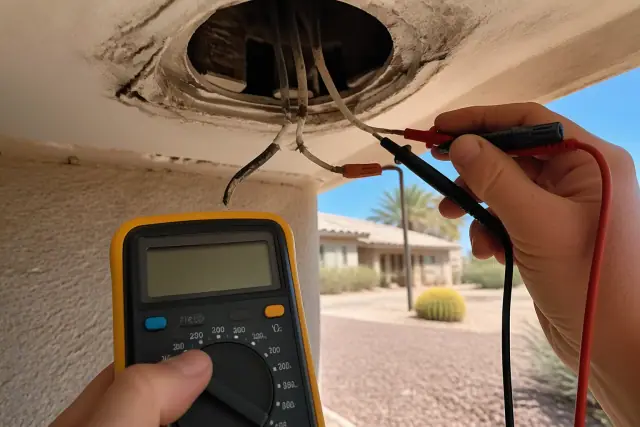
Multimeter probe testing damaged wires in a residential utility closet during an electrical repair in Phoenix, AZ.

Our 24/7 emergency dispatch is for burning smells, visible sparking, exposed wiring, a breaker that will not reset, or total power loss not caused by the utility. Monsoon season from June through September can damage service entrances and overhead lines, so storm-related hazards receive priority dispatch.

Request Estimate

Circuit Breaker Repair

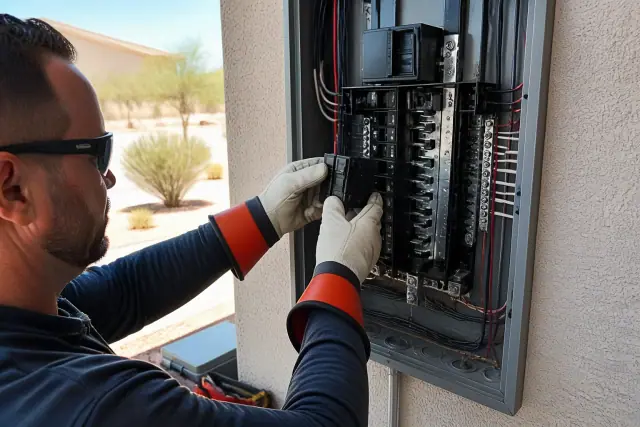
Electrician installing a circuit breaker into a residential panel in Phoenix, AZ.

We test the breaker, check panel-lug torque, and trace the circuit to determine whether the cause is an overload, short circuit, ground fault, loose connection, or failed breaker. Breaker replacement typically runs $150 to $350 depending on amperage and panel brand, and replacement equipment is matched to the specific panel.

Request Estimate

Electrical Panel Upgrades

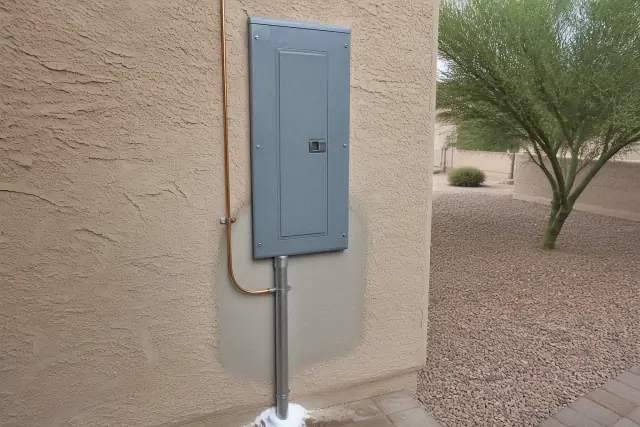
New electrical panel installed on a beige stucco wall at a home in Phoenix, AZ with desert landscaping.

Panels older than 25 to 40 years, fuse panels, and 60-amp or 100-amp services may not support central AC, modern appliances, and EV charging. We calculate the load, commonly size upgrades at 150-amp or 200-amp service, coordinate with Salt River Project or Arizona Public Service, and complete the swap in a single day in most cases; typical panel upgrades run $1,800 to $4,500.

Request Estimate

Outlet & Switch Installation

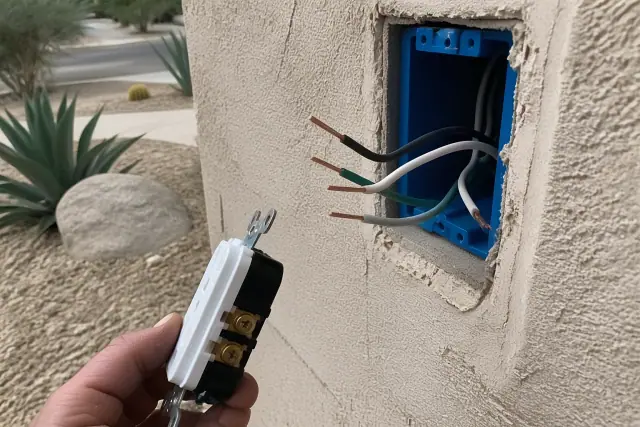
Exposed electrical wiring in a wall box for a new outlet installation at a home in Phoenix, AZ.

We install and replace standard outlets, GFCI receptacles, switches, and dimmers for kitchens, bathrooms, home offices, garages, and workshops. Placement starts with circuit capacity and NEC spacing requirements, followed by de-energizing, zero-voltage verification, and terminations torqued to the manufacturer's specification.

Request Estimate

Electrical Safety Inspections

Electrician installing a circuit breaker into a residential service panel in Phoenix, AZ.

A safety inspection checks the panel for corrosion and heat damage, tests GFCI and AFCI devices, examines attic wiring for rodent damage, and reviews outdoor and pool equipment for bonding and grounding concerns. You receive a written report that ranks findings by urgency and notes capacity for future circuits or an EV charger.

Request Estimate
Electrical System Options

Specialized Electrical Solutions

Some electrical problems call for more than a device replacement. These solutions address lighting faults, charging loads, obsolete wiring, required circuit protection, and the demands of commercial properties.

Technician using a multimeter to test residential light fixture wiring in Phoenix, AZ.

Flickering Lights Repair

Flicker can begin at a dimmer, fixture, junction box, neutral connection, or main panel lug. We test the complete path and check voltage under load before deciding whether the issue belongs to the property or needs documentation for SRP or APS.

  • Loose neutral testing
  • LED dimmer compatibility checks
  • Fixture and junction-box inspection
  • Panel-lug evaluation
  • Voltage testing under load
Request Estimate
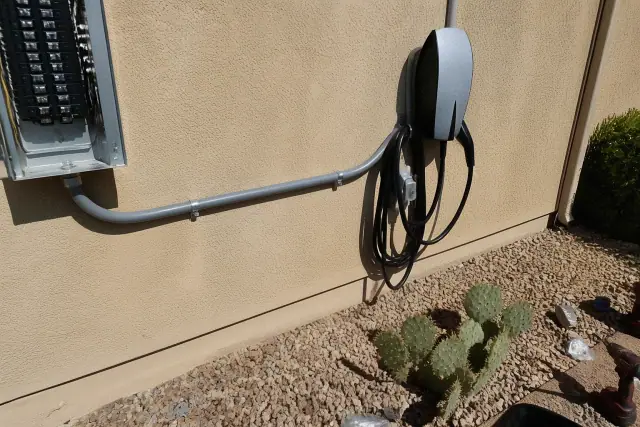
Technician installing an EV charger on a stucco wall with conduit and prickly pear cactus in Phoenix, AZ.

EV Charger Installation

We calculate the home's total load before adding a dedicated charging circuit. Level 1 uses a standard 120V outlet, while Level 2 typically uses a 240V outlet or hardwired circuit and reduces charging time to a few hours instead of overnight-plus.

  • Load calculation for existing service
  • Hardwired or plug-in Level 2 equipment
  • 40-amp or 50-amp dedicated circuits
  • Capacity review for older 100-amp panels
  • Commercial DC fast charging and 220V hookup scopes
Request Estimate
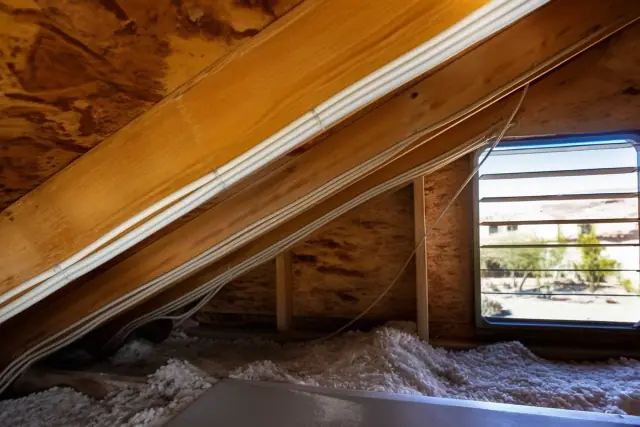
Electrical cables stapled to wooden attic rafters during a whole home rewiring project in Phoenix, AZ.

Whole Home Rewiring

Whole home rewiring replaces aluminum branch wiring, knob-and-tube remnants, or cracking cloth insulation with circuits sized for modern loads. A typical single-family project generally ranges from $8,000 to $20,000 or more and takes several days to a couple of weeks, depending on square footage and access.

  • Attic and crawlspace wiring assessment
  • New circuits through walls and ceiling cavities
  • New device and panel terminations
  • Drywall patching and repair
  • Permits and phased inspections
Request Estimate
Electrician installing a circuit breaker in a residential panel in Phoenix, AZ.

GFCI & AFCI Protection

Current code calls for GFCI protection in kitchens, bathrooms, garages, and outdoor locations, while bedroom circuits typically require AFCI protection. We install GFCI devices to UL 943 and AFCI protection to UL 1699 standards when adding circuits or updating older electrical work.

  • Kitchen and bathroom GFCI protection
  • Garage and outdoor GFCI protection
  • Bedroom AFCI circuit protection
  • Older-home circuit retrofits
  • Device function testing
Request Estimate
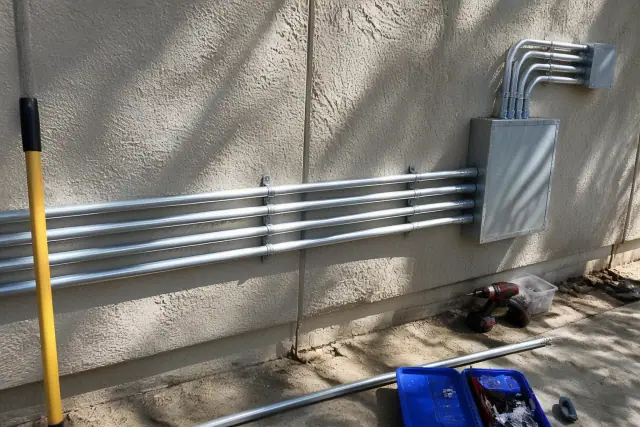
Exposed metal conduit and a junction box on a stucco wall at an industrial worksite in Phoenix, AZ.

Commercial Electrical Services

Commercial troubleshooting applies the same root-cause testing to larger loads, dedicated equipment, charging infrastructure, and business-critical circuits. We assess the existing capacity, isolate faults, and define permit and inspection requirements before installation or repair.

  • Commercial fault tracing
  • Dedicated equipment circuits
  • Charging infrastructure hookups
  • Panel and load evaluation
  • Permit and inspection coordination
Request Estimate
Finding the Right Repair

Choosing the Right Electrical Repair Approach

The right approach depends on the symptom, test results, equipment condition, and current load. Phoenix labor rates generally run $50 to $130 per hour depending on complexity, but we quote flat pricing on most straightforward repairs before starting and explain when a targeted repair, panel upgrade, or rewiring scope is appropriate.

Calibrated Fault Finding

Calibrated multimeters, thermal imaging cameras, circuit tracers, and load testing help separate symptoms from causes. That evidence guides whether a connection should be re-terminated, a breaker replaced, a circuit repaired, or a utility-side issue documented.

Licensed and Code-Compliant Work

Our electricians hold licensing through the Arizona Registrar of Contractors, and the company carries general liability insurance. Work follows current NEC requirements, required permits are pulled through the City of Phoenix, and panel installations use equipment listed to UL 67 standards.

Clear Scope and Pricing

You receive the applicable service-call or after-hours rate before dispatch, followed by a repair price after the fault is identified. Larger projects include a detailed scope covering load requirements, access, equipment, permits, inspections, and any related panel or service-entrance work.

What Sets Us Apart

Why Choose Us for Electrical Troubleshooting?

Phoenix Electrician Co. combines measured diagnostics with licensed, insured, permitted, and inspected electrical work. We explain what testing found, why the recommended repair fits the fault, and what the approved work will cost before moving forward.

Request Electrical Assessment

Frequent Breaker Trips

A repeatedly tripping breaker may be responding to an overloaded circuit, short circuit, or ground fault. Window AC units, pool pumps, and space heaters can pull more amperage than an older circuit was designed to carry, so we test both the breaker and the connected load.

Burning Smells and Sparking

A burning smell at a switch, receptacle, or panel can indicate arcing insulation, and visible sparks or exposed wiring require immediate attention. Stop using the affected device or circuit and call rather than waiting for a routine appointment.

Flickering or Dimming Lights

A single flickering fixture can point to a loose wire nut, backstabbed connection, or incompatible dimmer. Whole-house flicker when the AC compressor starts may instead indicate voltage drop or a loose main lug, which requires testing at the panel under load.

Aging, Undersized Panels

Fuse panels, visible rust, heat damage, limited breaker space, or insufficient capacity for AC and modern appliances can signal that a panel is no longer a good fit for the property. We compare current and anticipated loads before recommending repair or replacement.

Brittle or Obsolete Wiring

Cracking cloth insulation, aluminum branch wiring, knob-and-tube remnants, double-tapped breakers, and undersized conductors can make isolated repairs impractical. Inspection of accessible attic, crawlspace, panel, and device wiring helps define whether targeted work or a phased rewire is appropriate.

Monsoon and Pool Hazards

Dust storms and lightning can damage service entrances, overhead lines, and exposed outdoor wiring. Around pools and spas, we inspect bonding grids, grounding, and GFCI protection under the requirements of NEC Article 680.

How It Works

Our Electrical Troubleshooting Process

Our process moves from the reported symptom to safe isolation, measured testing, root-cause tracing, a clear repair scope, and final verification. The sequence is adjusted to the property and fault without skipping the safety checks that protect the circuit and connected equipment.

01.

Describe the Symptoms

We start with what you observed, when it happens, which devices were running, and whether the fault is constant or intermittent. Burning smells, sparks, exposed wiring, and total power loss are screened for emergency dispatch.

02.

Isolate and De-Energize

The affected circuit is identified and de-energized at the panel before device work begins. We verify zero voltage with a non-contact tester and keep unrelated circuits available when conditions allow.

03.

Test with Diagnostic Tools

A calibrated multimeter tests voltage and continuity, thermal imaging checks for abnormal heat, and a circuit tracer follows concealed wiring. Breakers and circuits may also be tested under load to reproduce intermittent behavior.

04.

Trace the Root Cause

We inspect panel lugs, breakers, junction boxes, switches, receptacles, fixtures, and connected equipment along the affected path. Loose terminations, heat damage, device failure, circuit overload, and supply-side fluctuation are separated before a repair is proposed.

05.

Review the Repair Scope

Once the fault is identified, we explain the recommended repair and provide the price before proceeding. If the scope involves a panel, new circuit, EV charger, or rewiring, we also identify the permits, utility coordination, and inspections involved.

06.

Repair, Verify, and Document

Approved repairs are completed with compatible equipment and terminations tightened to specification. We restore power, test operation, coordinate required inspections, and provide written findings when the visit is an electrical safety inspection.

Get Electrical Help

Schedule an Electrical Repair
& Troubleshooting
Consultation

Tell Phoenix Electrician Co. what your breakers, lights, outlets, switches, panel, or wiring are doing. We will assess the symptoms, identify the diagnostic scope, and explain the next step for scheduled or emergency electrical service.

Electrical Service Help

Electrical Repair & Troubleshooting FAQs

These answers cover common Phoenix questions about diagnostic costs, breaker trips, panel capacity, rewiring, EV charging, inspections, and urgent electrical hazards.

Call Our Electricians

Most troubleshooting visits start with a $75 to $150 service call fee, which covers travel and initial diagnosis and is typically credited toward an approved repair. Simple outlet or switch work generally runs $150 to $300, while diagnostics involving hidden or intermittent wiring faults can run $300 to $800. We provide a clear repair price after the initial diagnosis.

A newer panel without corrosion or heat damage may only need a failed breaker or loose connection repaired. A fuse panel, an aging enclosure, or service that cannot support AC, appliances, and planned charging loads may call for an upgrade. We compare test results and a load calculation before recommending either path.

A breaker may trip because of an overloaded circuit, short circuit, or ground fault. In Phoenix homes, high-draw equipment such as window AC units, pool pumps, and space heaters can overload older circuits. Testing shows whether the next step is load redistribution, wiring repair, or breaker replacement.

We do not recommend DIY outlet or switch installation. Incorrect wire gauge, reversed polarity, loose terminations, or missing GFCI protection can create a shock or fire hazard that is not immediately visible. Licensed work also supports permitting, testing, and code compliance.

Most single-family rewiring projects take several days to a couple of weeks, depending on square footage and access through attics, crawlspaces, finished walls, and ceilings. The work includes running circuits, terminating devices, coordinating inspections, and patching walls. We define the sequence before the project begins.

Most Level 2 chargers need a dedicated 240V circuit sized to 40 or 50 amps, but the panel must have enough capacity for that load alongside AC and appliances. Homes with older 100-amp service sometimes need a panel upgrade first. We perform the load calculation, install the circuit, and handle the required City of Phoenix permit.

Yes. Phoenix Electrician Co. dispatches after-hours service for genuine emergencies such as burning smells, sparking outlets, exposed wiring, or total power loss not caused by a utility outage. Emergency rates are higher than standard scheduled appointments, and we quote the dispatch rate before sending a technician.

Stop using the outlet and call for emergency electrical help. A burning smell can indicate arcing insulation, while visible sparking may involve a loose connection, damaged device, or wiring fault. Do not keep resetting the circuit or plugging equipment back in.

Flicker that coincides with the AC compressor starting can point to voltage drop at the panel or a loose main lug connection. We test voltage under load and inspect connections from the fixture back to the panel. If the fluctuation is supply-side, we document the findings for SRP or APS.

Consider an inspection before buying a Phoenix home, after major storm damage, or when a home is more than 20 years old and has not been inspected. A full inspection typically takes one to two hours depending on home size and panel accessibility. The written report ranks findings by urgency.

We calculate the property's current and anticipated load, size compatible equipment, coordinate the shutdown with SRP or APS, and complete the permitted installation. The City of Phoenix inspects the work before the utility restores permanent power. Service-entrance conductors may also need upgrading depending on the scope.

Current code requires GFCI protection in kitchens, bathrooms, garages, and outdoor outlet locations. Bedroom circuits typically require AFCI protection. We check the applicable requirements when installing new devices, adding circuits, or updating older wiring.

Replacement is appropriate when a breaker will not reset, trips instantly with no load, fails testing, or has scorch marks at its panel connection. The new breaker must be rated for compatibility with the specific panel rather than chosen only by amperage. We also inspect the connection for heat damage before restoring the circuit.