Proudly serving Phoenix, Scottsdale, Glendale, Peoria, Paradise Valley, Tempe & surrounding areasCall or Text 24/7: 480-264-8603
Aerial drone view of a suburban neighborhood and desert landscape with Saguaro cacti in Phoenix, AZ.

Outlet, Switch, GFCI & Smart Device Installation in Phoenix, AZ

Phoenix Electrician Co. installs and replaces outlets and switches for homes and commercial properties in Phoenix, Arizona. Our work includes standard 15 amp and 20 amp receptacles, GFCI and AFCI protection, smart switches, dimmers, USB combination outlets, and dedicated 240-volt circuits. We also relocate outlets when remodels change a room layout and troubleshoot the circuit before replacing a failed device. Customers across the Salt River Valley can use one local electrical team for outlet, switch, panel, lighting, ceiling fan, EV charger, rewiring, circuit breaker, and emergency electrician needs.

Phoenix attic temperatures can pass 150 degrees, and repeated heat cycling can stress insulation, device housings, and switch mechanisms. Homes in Arcadia, Encanto, and Maryvale built before the 1980s may also have two-prong receptacles or aluminum branch wiring that was not designed for today's appliance loads. Our electricians check for loose neutrals, backstabbed connections, undersized boxes, overloaded circuits, and degraded wiring before recommending a device. Installations follow National Electrical Code requirements adopted by the City of Phoenix Development Services Department, with permits and inspections coordinated when the scope requires them.

Same-day service is available for most residential calls, and most residential outlet and switch projects receive a flat quote before work starts.

Phoenix Electrician Co. provides outlet and switch installation in Phoenix, Scottsdale, Tempe, Mesa, Chandler, and Glendale throughout the Salt River Valley.

★ ★ ★ ★ ★4.9/5 Average Rating · 20+ Years of Experience · Thousands of Customers Helped · Licensed & Insured · Residential & Commercial

Outlet & Switch Options & Benefits

What Outlet & Switch Installation Covers

Outlet and switch installation can mean replacing a worn device, adding a receptacle where no wiring exists, relocating a box for a remodel, or creating a dedicated circuit for an appliance, workshop tool, or EV charger.

Each job requires the right box size, wire gauge, grounding method, breaker rating, and device amperage. Wet areas, bedrooms, living spaces, and exterior locations may also need GFCI, AFCI, tamper-resistant, or weatherproof protection.

Phoenix market pricing ranges from $75 to $500 per device depending on the device type, wall access, wire-run length, and whether new wiring is needed. A straightforward swap averages near $210 in the market, while a project-specific flat quote clarifies the cost before installation begins.

Benefits of Professional Installation

Professional installation addresses the device and the circuit behind it, helping prevent a simple replacement from concealing an overloaded circuit, damaged conductor, or loose connection.

  • Device amperage matched to the breaker and wire gauge
  • Secure boxes that keep outlets firm when plugs are inserted
  • GFCI protection for kitchens, bathrooms, garages, and wet areas
  • AFCI protection for bedroom circuits in most new work
  • Tamper-resistant receptacles in living areas
  • In-use weatherproof covers for outdoor outlets
  • Bulb and neutral-wire compatibility checks for smart controls
  • Permit and inspection coordination for qualifying new circuits
Outlet & Switch Services

Phoenix Outlet & Switch Services

Choose a direct device replacement, a protection upgrade, a modern control, or new wiring based on the location, circuit load, and way you use the space. Our electricians assess the existing box and circuit before matching the installation to the application.

Standard Outlet & Switch Replacement

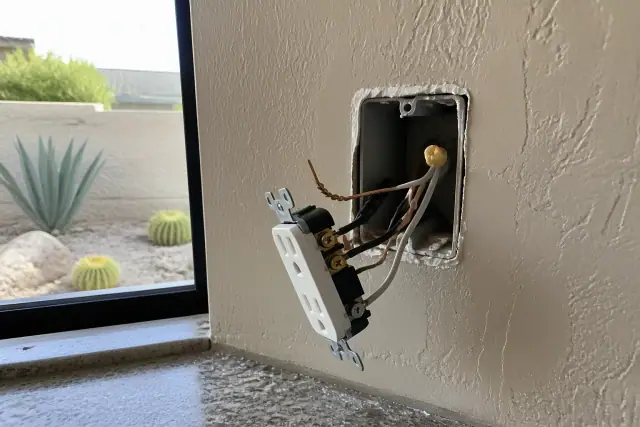
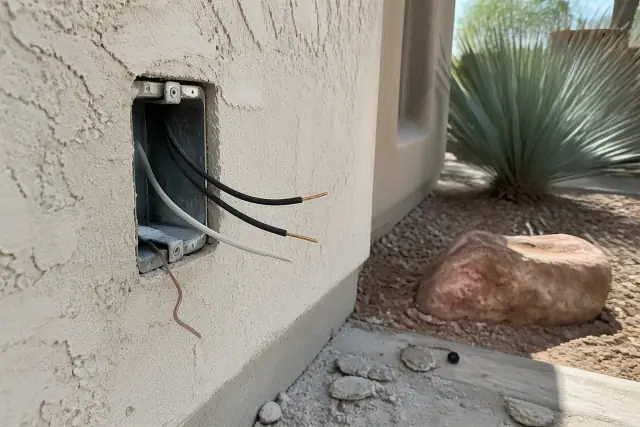
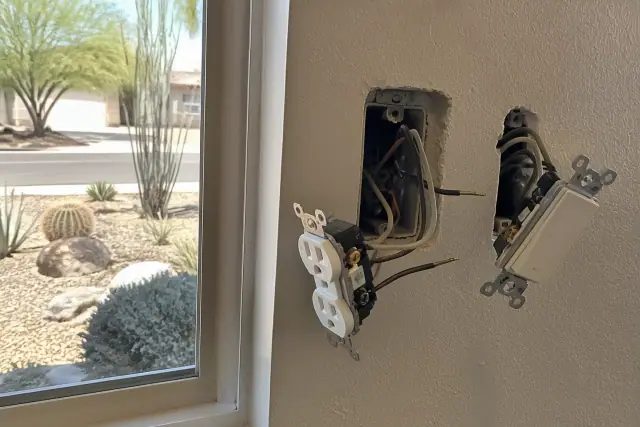
Exposed electrical wiring in a Phoenix, AZ home, showing a wall box prepared for a new outlet installation.

Replacing an existing standard outlet, toggle, or Decora-style switch typically costs $75 to $150 per location, including the device and plate. Most single-device swaps take 30 to 60 minutes after the electrician has access to the panel and confirms the circuit is sound.

Request Estimate

GFCI & AFCI Protection

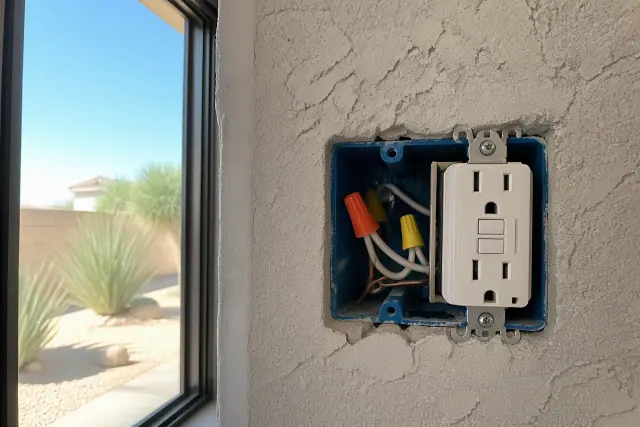
Exposed electrical wall box with a new GFCI receptacle and wiring in a Phoenix, AZ home.

GFCI devices shut power off in a fraction of a second when current leaks from the intended path, helping protect people near sinks, pools, spas, irrigation equipment, garages, and outdoor areas. Installed GFCI outlets in the Phoenix market commonly run $100 to $175 per device, while AFCI protection is used on bedroom circuits in most new work.

Request Estimate

Smart Switches & Dimmers

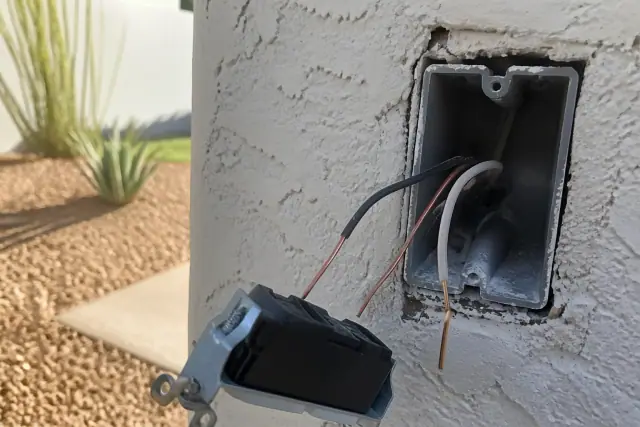
Exposed electrical wall box with copper wiring for a smart switch installation in a home in Phoenix, AZ.

Smart switches can add app or voice control, while compatible dimmers adjust LED or incandescent lighting without flicker. We verify bulb compatibility, a stable neutral connection, and the correct wiring arrangement for single-pole, three-way, or four-way controls before installation.

Request Estimate

240-Volt Dedicated Outlets

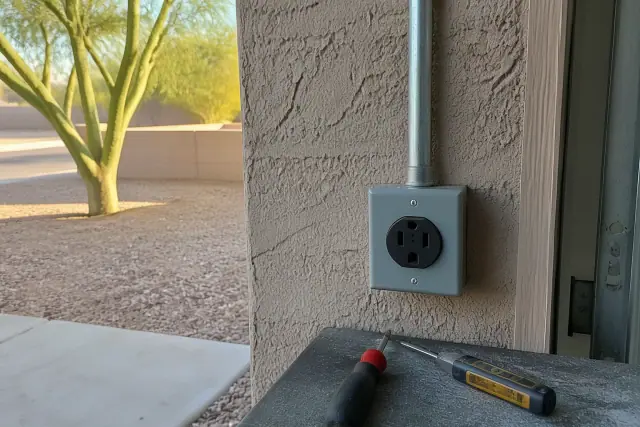
Completed 240V outlet installation with conduit on a stucco wall at a Phoenix, AZ home.

A 240-volt outlet in Phoenix averages $227, with a typical market range of $181 to $310 depending on the wire run and available panel capacity. Dryer and range circuits may require dedicated 30 amp or 40 amp breakers, while a Level 2 EV charger commonly calls for a dedicated 240-volt, 40 to 50 amp circuit.

Request Estimate

USB-A & USB-C Combination Outlets

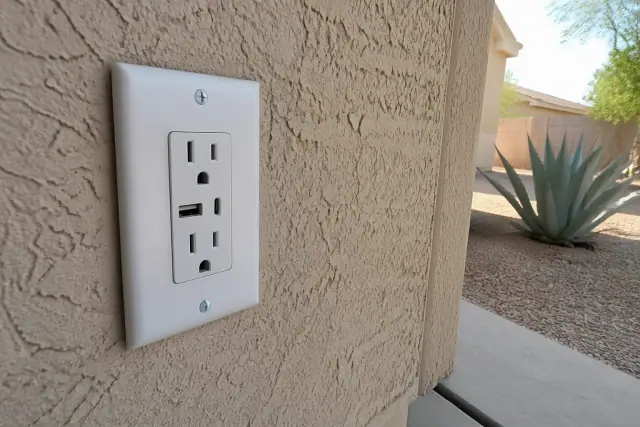
USB-A and USB-C wall outlet installed in a Phoenix, AZ garage with stucco walls and desert landscaping.

USB combination outlets pair standard receptacle slots with built-in USB-A or USB-C ports for kitchens, offices, and nightstand locations. Typical installed pricing runs $125 to $200 per unit, and several devices can be placed on one properly sized circuit to form a convenient charging zone.

Request Estimate

New Outlets & Relocation

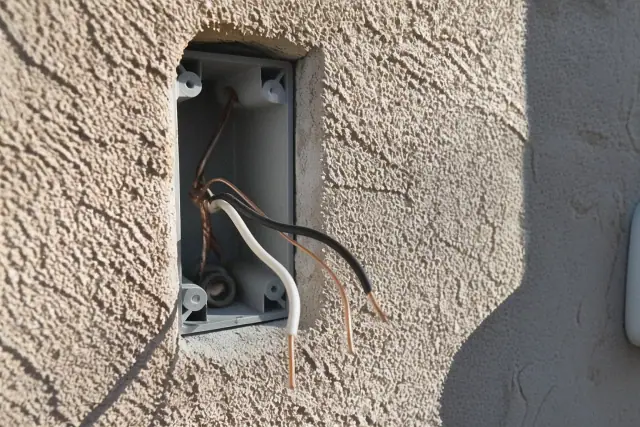
Exposed electrical wiring and wall box for a new outlet installation in Phoenix, AZ.

Adding an outlet where no wiring exists generally runs $200 to $400 or more, depending on cable length, attic or wall access, and whether the circuit has enough capacity. New and relocated boxes can reduce reliance on extension cords while placing power at counters, desks, entertainment centers, workshops, or remodeled walls with minimal patching.

Request Estimate
Device & Circuit Options

Types of Outlet & Switch Options

The right device depends on circuit amperage, exposure to water or weather, equipment demand, control preferences, and the existing wiring in the box. These options cover everyday replacements, code protection, modern controls, and higher-capacity installations.

Exposed electrical wall box with copper wiring for a receptacle installation in a Phoenix, AZ home.

Standard & Charging Receptacles

We match receptacle style and rating to the circuit and application, with options ranging from everyday duplex devices to integrated charging outlets and application-specific devices.

  • 15 amp duplex receptacles for general-use circuits
  • 20 amp T-slot devices for higher-draw applications
  • USB-A and USB-C combination receptacles
  • Decora-style devices for modern plates and finishes
  • Hospital-grade devices where the application calls for them
Request Estimate
Exposed electrical wall box with copper wiring for an outlet installation at a job site in Phoenix, AZ.

Protected Outlet Options

Protected devices are selected around shock, arc, access, and weather exposure concerns rather than appearance alone. The circuit and location determine which protection method applies.

  • GFCI protection near water sources
  • AFCI protection for applicable bedroom circuits
  • Tamper-resistant devices for living areas
  • Weatherproof exterior devices with in-use covers
  • Grounded three-prong or GFCI-protected upgrades
Request Estimate
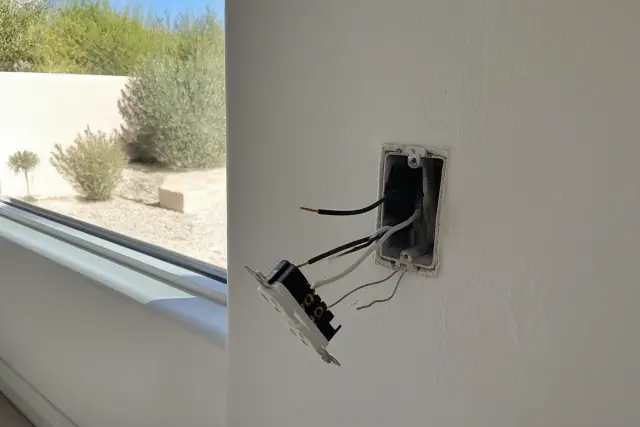
Electrical wiring and outlet installation in a wall box at a home in Phoenix, AZ, with a view of a xeriscaped yard.

Switch & Lighting Controls

Switch options can preserve an existing look or add more precise lighting control. Wiring layout and fixture compatibility guide the final selection.

  • Traditional toggle switches
  • Decora-style rocker switches
  • LED- and incandescent-compatible dimmers
  • App- and voice-controlled smart switches
  • Single-pole, three-way, and four-way controls
Request Estimate
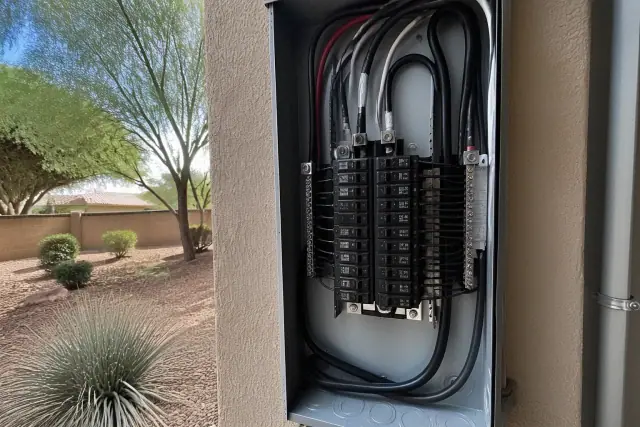
Electrician installing a dedicated high-capacity circuit breaker in a residential panel in Phoenix, AZ.

Dedicated & High-Capacity Circuits

Dedicated circuits are sized to the equipment nameplate and the panel's available capacity. Phoenix homes built in the 1990s and earlier may need a panel upgrade before a new EV charging circuit can fit safely.

  • 120-volt general-use workshop outlets
  • 240-volt compressor, welder, and table saw outlets
  • 30 amp dryer circuits
  • 40 amp range circuits
  • 40 to 50 amp Level 2 EV charging circuits
Request Estimate
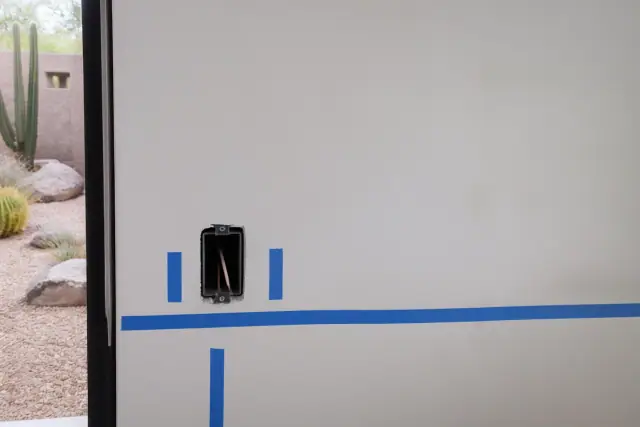
Masking tape layout for a new wall outlet installation in a Phoenix, AZ residential job site.

Room-Specific Outlet Planning

Thoughtful placement puts power where appliances, tools, entertainment equipment, computers, and chargers are actually used. Planning several locations together can also reduce repeat setup and access work.

  • Kitchen receptacles placed so no counter point is more than 24 inches from an outlet
  • Three or four clustered outlets for entertainment equipment
  • Desk-height outlets for offices and bedrooms
  • One or two 240-volt outlets alongside 120-volt garage power
  • Multi-room planning for six or more new outlet locations
Request Estimate
Finding Your Right Fit

Choosing the Right Outlet & Switch Approach

Start with the location, the equipment or fixture being served, and the symptoms of the existing circuit. From there, we compare load, breaker size, wire gauge, box condition, grounding, wall access, and code protection to determine whether the right answer is repair, replacement, relocation, or a new dedicated circuit.

Arizona-Licensed Electricians

Our electricians carry Arizona Registrar of Contractors licensing and stay current on National Electrical Code updates through continuing education tracked by industry trade groups. That training supports informed decisions about device ratings, grounding, circuit protection, and installation methods.

Code & Permit Coordination

Straight device replacement generally does not require a permit, but new circuits, relocated outlets, and service upgrades may. We handle permit paperwork and coordinate City of Phoenix inspection scheduling when the scope requires it.

Upfront Flat Pricing

Licensed electrician labor in the Phoenix market generally runs $50 to $100 per hour, but Phoenix Electrician Co. quotes flat pricing on most residential outlet and switch installations. You receive the project number before work starts rather than waiting for the final invoice to learn the total.

What Sets Us Apart

Why Choose Us for Outlet & Switch Installation?

A new device is only as reliable as the box, wiring, and circuit behind it. Our technicians inspect for backstabbed connections, loose neutrals, undersized boxes, overloaded circuits, damaged insulation, and panel-capacity limits, then explain the installation option that fits the actual condition.

Request an Estimate

Dead Outlets & Switches

A dead receptacle may be caused by a tripped upstream GFCI, loose neutral, failed breaker, or device fault. Troubleshooting starts at the panel and follows the circuit outward so the underlying problem is identified before a replacement is installed.

Sparking or Hot Receptacles

Sparks or heat at a receptacle can point to arcing connections, circuit overload, or wire insulation degraded by years of attic heat. Phoenix Electrician Co. treats this as a same-day priority because it can indicate a fire risk rather than a cosmetic device issue.

Loose or Wobbly Outlets

An outlet that moves when a plug is inserted may have stripped mounting screws or a box pulling away from the stud. Re-securing or replacing the box and device restores a firm connection point instead of leaving the wiring to flex behind the wall.

Too Few Outlets

Older Phoenix homes may have fewer receptacles than modern kitchens, offices, and entertainment areas need. Adding properly placed outlets can replace the long-term use of extension cords and crowded power strips with permanent power where equipment is used.

Ungrounded Two-Prong Outlets

Homes built before the mid-1960s may still have ungrounded two-prong receptacles. Depending on the circuit, the appropriate upgrade may be a grounded three-prong device or a GFCI-protected solution installed to National Electrical Code requirements.

Faulty Light Switches

A switch that sticks, hums, or fails to turn a fixture fully off may have worn internal contacts or an issue in the circuit. We evaluate the wiring and replace worn single-pole, three-way, or four-way controls with a compatible switch.

How it works

Our Outlet & Switch Process

The process begins with the circuit rather than the faceplate. We trace the issue, confirm the load and installation conditions, review pricing and permit needs, complete the work, and test the result before wrapping up.

01.

Assess the Existing Circuit

We begin at the panel, then check the device, box, grounding, connections, and upstream protection. This helps distinguish a failed outlet or switch from a loose neutral, tripped GFCI, failed breaker, or broader wiring problem.

02.

Plan the Device & Location

We identify the device type, amperage, control features, protection requirements, and final placement. For new circuits, we also consider equipment demand, panel capacity, cable route, and wall or attic access.

03.

Review Pricing & Permit Needs

Most residential projects receive a flat quote before work starts. We also determine whether the scope is a straightforward replacement or work that requires a City of Phoenix permit and inspection.

04.

Prepare the Box & Wiring

The box is secured and sized for the conductors, and the wiring is checked for damage, backstabbed connections, and the correct gauge. New cable is routed when the project adds or relocates an outlet.

05.

Install the Correct Device

We install the selected receptacle or switch with the proper grounding, terminal connections, plate, and required GFCI, AFCI, tamper-resistant, or weatherproof protection. Smart controls and dimmers are matched to the neutral-wire and fixture requirements.

06.

Test & Coordinate Inspection

The finished device and circuit are tested for proper function, including GFCI operation when applicable. If the project requires inspection, we coordinate scheduling with the City of Phoenix Development Services Department.

Plan Your Electrical Upgrade

Schedule an Outlet & Switch Consultation

Tell Phoenix Electrician Co. whether you need a failed device replaced, safer protection near water, smarter lighting control, better outlet placement, or a dedicated 240-volt circuit. We can assess the existing wiring and provide a clear project quote before work begins.

Outlet & Switch Help

Outlet & Switch Installation FAQs

Review common questions about pricing, timelines, device choices, protection, permits, and outlet placement in Phoenix. A circuit assessment can resolve the details for your specific wall access, panel capacity, and wiring condition.

Call Our Electricians

Phoenix market pricing spans about $75 to $500 per device depending on type and complexity, while a single outlet installation commonly falls between $130 and $310 with an average around $210. A straightforward existing-device replacement is usually $75 to $150, and adding a new outlet with new wiring generally costs $200 to $400 or more. Phoenix Electrician Co. provides a flat quote before starting most residential work.

A single replacement usually takes 30 to 60 minutes once the electrician is on site and can access the panel. A new outlet that requires wiring often takes one to three hours, depending on wall construction and attic or crawlspace access. Projects with six or more new outlets may take a half day to a full day.

A loose device with sound wiring may only need the box secured or the worn receptacle replaced. Scorch marks, melted insulation, aluminum wiring, or repeated breaker trips point to a circuit issue that needs more than a faceplate-level swap. Troubleshooting from the panel helps identify the right repair.

Straightforward replacement of an existing device generally does not require a permit. Adding a new circuit, relocating an outlet, or installing a 240-volt circuit for an appliance or EV charger typically does under City of Phoenix Development Services Department requirements. Phoenix Electrician Co. handles the application and inspection scheduling when a permit is required.

A 15 amp outlet is common on general lighting and small-appliance circuits. A 20 amp outlet has a T-shaped slot and is used for kitchen counters, laundry circuits, and other higher-draw applications. The breaker rating and wire gauge must support the device, so a 20 amp receptacle should not simply be placed on a 15 amp circuit.

Smart switches often need a stable neutral connection, which may be missing in an older switch box, and dimmers must match the connected LED or incandescent lamps. Three-way and four-way circuits also require the correct wiring arrangement. A licensed electrician can check those conditions and help prevent flickering, buzzing, or pairing failures.

A GFCI monitors current and shuts power off in a fraction of a second when it detects leakage, helping prevent shock near water. Current code calls for GFCI protection in kitchens, bathrooms, garages, outdoor locations, and near other water sources. It is especially relevant around Phoenix pools, spas, and irrigation equipment.

A 240-volt project requires a dedicated circuit sized for the appliance or equipment and the panel's available capacity. Dryer and range circuits may use 30 amp or 40 amp breakers, while a Level 2 EV charger commonly needs 40 to 50 amps. Phoenix market pricing averages $227, with a typical range of $181 to $310 based on wire length and panel capacity.

USB combination outlets typically cost $125 to $200 per unit installed in the Phoenix market. They combine standard receptacle slots with built-in USB-A or USB-C charging ports and are commonly used in kitchens, offices, and beside beds.

Outdoor receptacles need weatherproof construction and an in-use cover that protects the connection while a cord is plugged in. The cover should account for monsoon-season humidity and dust rather than relying on a basic flip lid. GFCI protection is also used for outdoor and wet-area locations.

New kitchen counter outlets are generally placed so no point along the counter is more than 24 inches from a receptacle. Those locations also need the appropriate GFCI protection. The final layout depends on the counter arrangement, existing circuit capacity, and local code requirements.

Options include standard duplex, GFCI, AFCI-protected, USB combination, weatherproof, tamper-resistant, hospital-grade, and 240-volt receptacles. Switch choices include toggle, Decora-style rocker, dimmer, smart, single-pole, three-way, and four-way controls. The circuit and application determine which device is appropriate.

Phoenix Electrician Co. serves Phoenix, Scottsdale, Tempe, Mesa, Chandler, and Glendale across the Salt River Valley. In Phoenix, the source service area also includes neighborhoods such as Arcadia, Encanto, and Maryvale. Same-day service is available for most residential calls.