Proudly serving Phoenix, Scottsdale, Glendale, Peoria, Paradise Valley, Tempe & surrounding areasCall or Text 24/7: 480-264-8603
Aerial drone view of a suburban neighborhood and desert landscape with Saguaro cacti in Phoenix, AZ.

Emergency Electrical Repair & Hazard Troubleshooting in Phoenix, AZ

Phoenix Electrician Co. provides emergency electrical repair and troubleshooting for homes and businesses in Phoenix. Our electricians respond to power loss, burning outlets, electrical shocks, damaged wiring, and repeated breaker trips. We also handle circuit breaker repair and replacement, panel upgrades, whole-home rewiring, and related residential or commercial electrical work when the fault requires a larger repair. Call when something is wrong with your power, and our dispatcher will help you take safe next steps before the electrician arrives.

Phoenix electrical systems contend with summer heat that regularly tops 115 degrees, monsoon voltage spikes, and housing that ranges from 1950s bungalows with cloth-wrapped wiring to newer Desert Ridge builds. We diagnose faults with load calculations, thermal imaging on suspect panels, continuity testing, and circuit mapping instead of guesswork. Our crews work to National Electrical Code (NEC/NFPA 70) standards and coordinate required permits with the City of Phoenix Development Services Department. That code-driven process matters when a dangerous symptom could trace to a device, branch circuit, main panel, or utility-side problem.

Emergency response is available 24/7 for nights, weekends, and holidays, with same-day service standard for calls flagged as safety hazards. Tell the dispatcher what you see, smell, or hear, which circuits are affected, where the panel is located, and whether you safely shut off the main so the electrician can arrive prepared.

Phoenix Electrician Co. provides emergency electrician service throughout Phoenix and the greater Valley, including Scottsdale, Tempe, Mesa, Chandler, Gilbert, Glendale, Peoria, Surprise, and Avondale.

★ ★ ★ ★ ★4.9/5 Average Rating · 20+ Years of Experience · Thousands of Customers Helped · Licensed & Insured · Residential & Commercial

Emergency Electrical Service Options & Benefits

What Is Emergency Electrical Service?

Emergency electrical service combines immediate safety guidance, risk-based dispatch, fault diagnosis, and the repair needed to stabilize a dangerous electrical condition. Calls involving active arcing, smoke, burning odors, shocks, or total power loss receive priority over a flickering fixture or a dead outlet in an unused room.

The electrician first isolates power and verifies de-energization before tracing the fault. Testing can distinguish a failed GFCI, loose neutral, short, overloaded circuit, damaged insulation, bad breaker, panel failure, meter-base issue, or an APS or SRP utility-side outage.

Useful call details include the panel location, breaker labels, affected circuits, property age, and any burning-plastic or ozone odor. Sharing whether the main breaker is already off helps the dispatcher brief the responding electrician and shorten on-site diagnostic time.

Benefits of Emergency Electrical Response

A structured emergency response protects people first, narrows the source of the fault, and helps avoid replacing parts that are not causing the problem. The goal is a stable repair supported by testing, code checks, and clear information about any larger issue that still needs attention.

  • 24/7 coverage for nights, weekends, and holidays
  • Risk-based triage for smoke, arcing, shocks, and burning odors
  • Phone guidance on safe steps before the electrician arrives
  • Circuit mapping and testing instead of trial-and-error diagnosis
  • Repairs checked against present-day electrical code
  • Clear distinction between a device repair, dedicated circuit, and panel upgrade
  • Residential and commercial emergency troubleshooting
  • Staged re-energizing to confirm the system is stable
Emergency Electrical Services

Phoenix Emergency Electrical Services

Emergency symptoms can begin at an outlet and lead back to a branch circuit, breaker, panel, service equipment, or utility connection. We match the repair to the diagnosed fault and address the electrical work needed to make the affected system safe and functional.

24/7 Emergency Dispatch

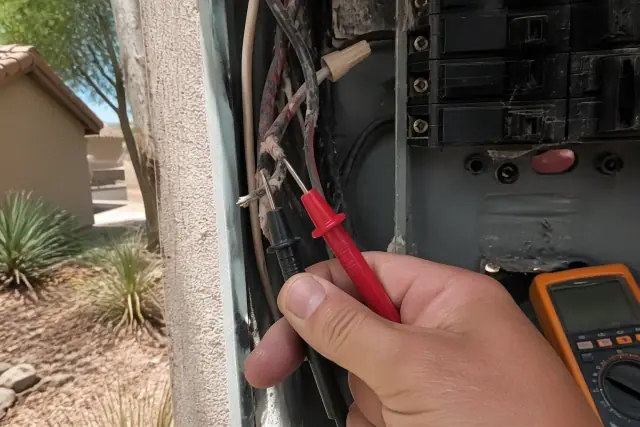
Multimeter probe testing frayed wires inside a residential utility closet in Phoenix, AZ.

Whether a breaker box starts smoking at 11 p.m. or a panel fails at 2 a.m. during a 118-degree heat wave, emergency coverage extends through nights, weekends, and holidays. Dispatch is based on safety risk so active smoke, arcing, burning odors, and shock reports move ahead of lower-risk symptoms.

Request Estimate

Power-Loss Troubleshooting

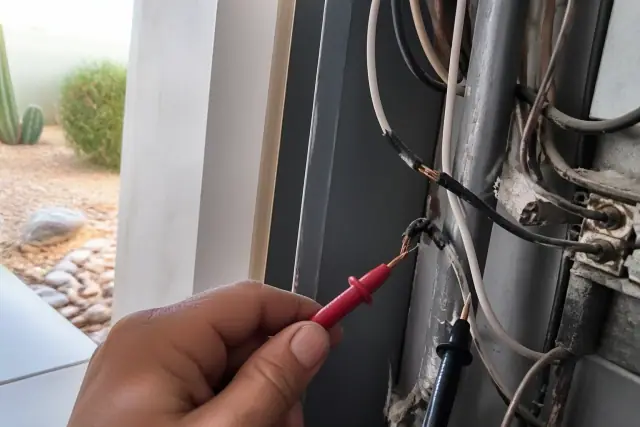
Electrician testing damaged wires with a multimeter in a residential utility closet in Phoenix, AZ.

A dead room may come from a tripped breaker, failed upstream GFCI, or loose neutral, while a whole-home outage may involve the main breaker, meter base, APS, or SRP. Circuit mapping identifies whether the fault is inside the property or on the utility side.

Request Estimate

Smoke, Sparking, and Shock Repairs

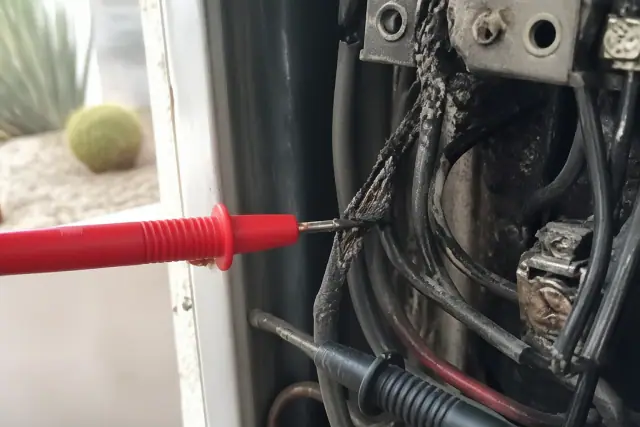
Multimeter probe testing charred wires during an electrical emergency repair in a Phoenix, AZ residential utility closet.

Burning devices, arcing receptacles, and shocks can trace to overheated connections, reverse polarity, missing grounds, moisture intrusion, or deteriorated insulation. We replace damaged wiring or devices, verify the circuit, and inspect adjacent outlets on the same run when appropriate.

Request Estimate

Circuit Breaker Repair and Replacement

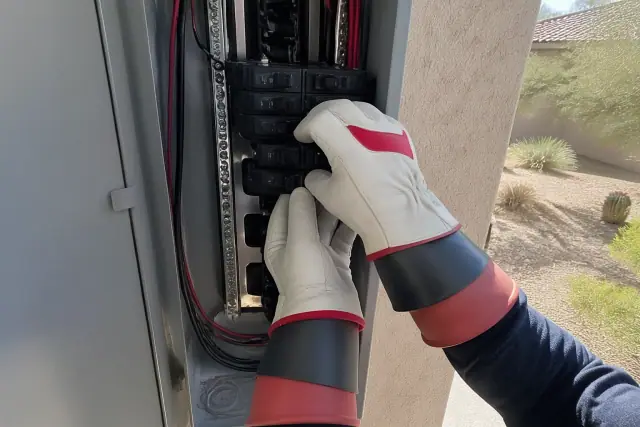
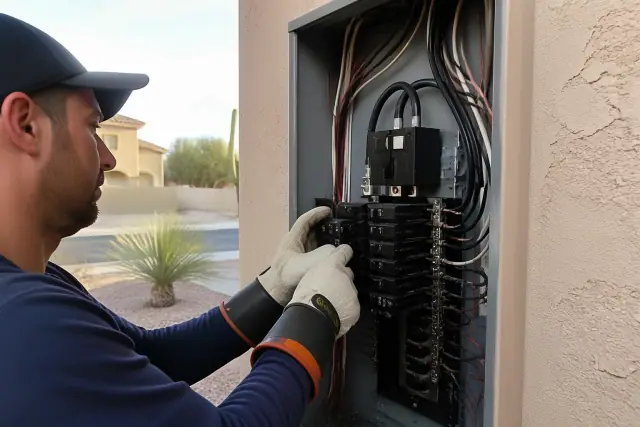
Electrician wearing insulated gloves installs a new circuit breaker in a residential panel in Phoenix, AZ.

A breaker that repeatedly trips, feels hot, or will not hold a reset may have failed or may be protecting an overloaded or shorted circuit. We compare breaker rating, wire gauge, and connected load before determining whether the answer is a replacement breaker or a dedicated circuit.

Request Estimate

Electrical Panel Upgrades

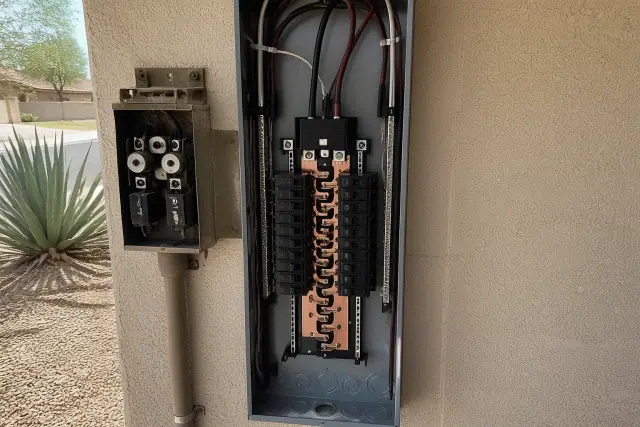
New electrical panel installation with copper bus bars and wiring on a stucco wall in Phoenix, AZ.

Warm breaker handles, whole-house flickering, a fuse box, or inadequate service capacity can point to the need for a panel upgrade. Load planning is especially important before adding an EV charger or second air-conditioning condenser.

Request Estimate

Residential and Commercial Emergency Service

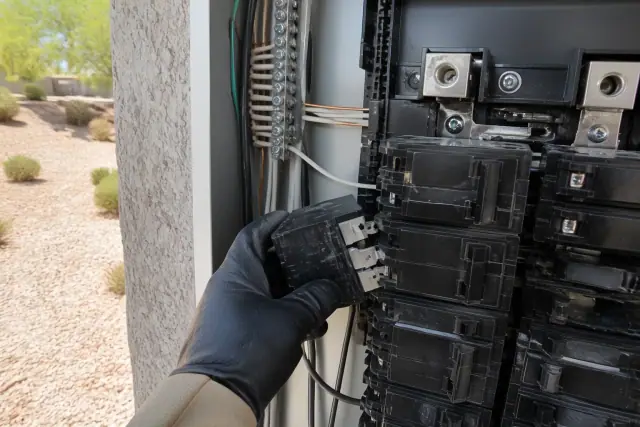
Electrician installing a circuit breaker into a residential panel board in Phoenix, AZ.

Phoenix Electrician Co. troubleshoots electrical emergencies in homes, single-family retrofits, multi-tenant properties, and commercial buildouts. When the fault reveals a larger need, supported work includes outlet and switch installation, lighting and ceiling fans, panel work, circuit repair, and whole-home rewiring.

Request Estimate
Emergency Repair Options

Types of Emergency Electrical Repairs

The correct repair depends on the symptom, the fault location, the property's wiring and service capacity, and whether storm, heat, age, or connected load contributed to the failure. These repair categories cover the most common residential and commercial emergencies described by Phoenix callers.

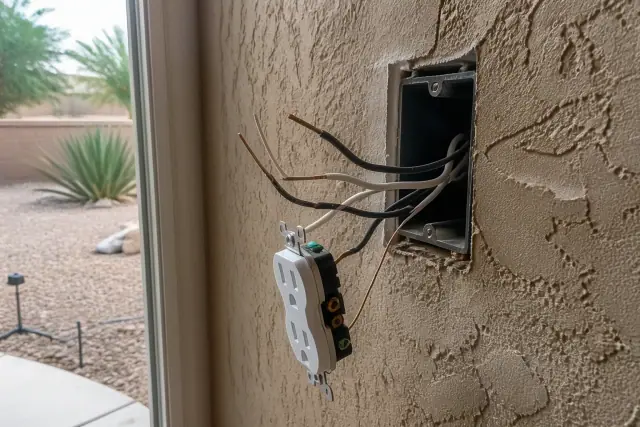
Exposed electrical wiring for a wall outlet repair in Phoenix, AZ.

Outlet and Switch Emergencies

A dead, hot, smoking, sparking, or shocking outlet needs diagnosis beyond the faceplate. The fault may sit at that device or farther upstream on the same branch circuit.

  • Failed upstream GFCI protection
  • Loose neutral connections
  • Reverse polarity or missing grounds
  • Moisture intrusion behind the wall plate
  • Aging or heat-damaged insulation
Request Estimate
Electrician installing a circuit breaker into a residential service panel at a job site in Phoenix, AZ.

Breaker and Panel Problems

Breakers protect wiring from excess current, but recurring trips or excessive heat can indicate a failed device, overloaded circuit, or larger panel condition. Inspection focuses on both the breaker and the equipment around it.

  • Breakers that trip repeatedly or will not reset
  • Hot or discolored breaker handles
  • Wire gauge that does not match breaker rating
  • Double-tapped breakers or missing knockouts
  • Panel corrosion from evaporative-cooler drainage
Request Estimate
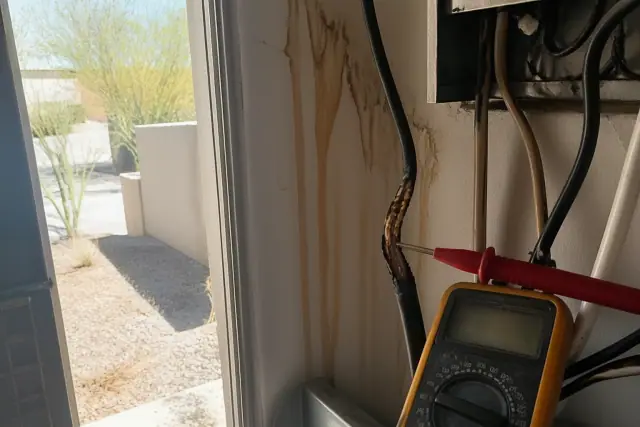
Multimeter testing damaged, scorched wires in a Phoenix, AZ utility closet with water staining on stucco walls.

Monsoon and Surge Damage

Seasonal monsoon storms can spike voltage, damage service equipment, and interrupt power to part or all of a property. Troubleshooting separates utility problems from failures in the home's service and branch circuits.

  • Monsoon-related voltage spikes
  • Partial or whole-property power loss
  • APS or SRP utility-side faults
  • Service mast or panel damage
  • Planning for whole-house surge protection
Request Estimate
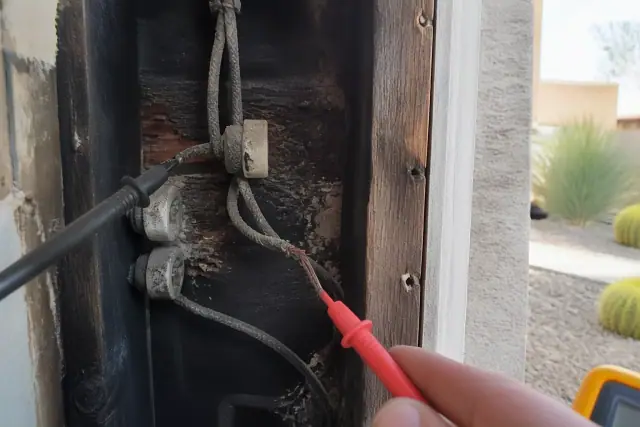
Multimeter probe testing frayed, charred knob-and-tube wiring inside a dark wall in a Phoenix, AZ home.

Older-Home Wiring Hazards

Older Phoenix properties may combine legacy wiring with loads the original system was never designed to carry. Homes built before the 1980s deserve particular attention when shocks, heat, or recurring trips appear.

  • Cloth-wrapped wiring in 1950s bungalows
  • Older aluminum branch circuits
  • 60 or 100-amp service in Encanto, Willo, and Coronado
  • Deteriorated insulation and missing grounds
  • Code checks before repair or rewiring
Request Estimate
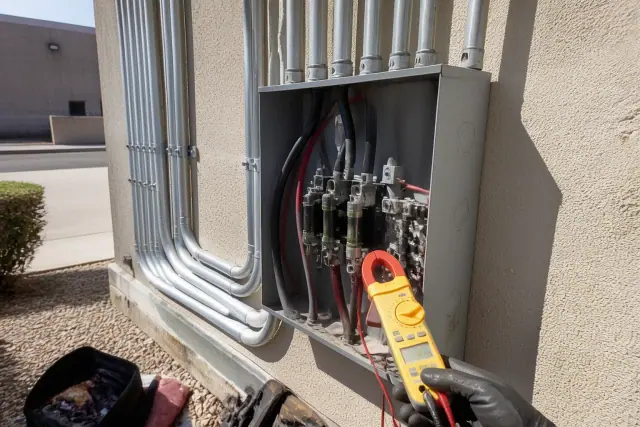
Electrician inspecting a faulty junction box on an industrial wall with conduit pipes in Phoenix, AZ.

Commercial Electrical Emergencies

Commercial faults can affect multiple tenants, connected equipment, and larger electrical loads. The response still begins with isolation and testing, then expands to the permitting or utility coordination the repair requires.

  • Multi-tenant power-loss troubleshooting
  • Commercial circuit and load assessment
  • Thermal imaging on suspect panels
  • Electrical work for commercial buildouts
  • Permit and utility coordination when required
Request Estimate
Finding the Safe Repair

Choosing the Right Emergency Repair Approach

The safest approach starts with the symptom and the level of risk, then follows testing to the actual fault. A device replacement may solve a local failure, while recurring trips, insufficient capacity, damaged service equipment, or deteriorated wiring may require a dedicated circuit, panel work, or rewiring instead.

Risk-Based Emergency Triage

Calls are prioritized by what the customer sees, smells, hears, or feels. Active arcing, smoke, burning odors, and shock reports receive the fastest isolation response, while lower-risk symptoms can be scheduled appropriately.

Code-Driven Diagnostics

Load calculations, thermal imaging, continuity testing, voltage checks, and circuit mapping help locate the fault without guessing. Repairs are evaluated against NEC/NFPA 70 standards, with City of Phoenix permits obtained when the scope requires them.

Licensed and Insured Protection

The team operates under Arizona Registrar of Contractors licensing and carries general liability coverage for residential and commercial work. Customers may ask for the contractor license number, proof of insurance, and the technician's journeyman or master electrician credentials before work begins.

What Sets Us Apart

Why Choose Us for Emergency Electrical Service?

Phoenix Electrician Co. combines round-the-clock dispatch with a safety sequence that starts by verifying power is off, testing before contact, identifying the fault, and planning the repair only after the cause is clear. We coordinate City of Phoenix permits and APS or SRP service work when required, explain labor, parts, and permit costs separately, and want customers to call back if a completed repair does not hold.

Request Emergency Service

Partial or Whole-Home Power Loss

One dead room may point to a breaker, upstream GFCI, or loose neutral; a full outage can involve the main breaker, meter base, APS, or SRP. Circuit mapping determines where property wiring ends and a utility issue begins.

Electrical Shocks and Ground Faults

A shock from an outlet, switch, or appliance means current has found a path to ground where it should not. Testing checks reverse polarity, missing grounds, and deteriorated insulation before anyone treats the device as safe.

Burning Odors or Visible Smoke

Burning plastic, ozone, or smoke can indicate an overheated connection, undersized wire for the load, or a failing breaker. Customers are instructed to cut power at the main when they can do so safely and stay clear until the source is isolated.

Sparking Outlets and Damaged Wiring

Arcing behind a receptacle may come from a loose connection, moisture intrusion, or aging insulation. The damaged section is replaced, the circuit is checked against present-day code, and adjacent devices on the run are evaluated as needed.

Repeated Circuit Breaker Trips

Recurring trips on the same circuit often signal an overload, failed breaker, or downstream short. Comparing connected load, breaker rating, and wire gauge shows whether the circuit needs a breaker repair or a dedicated circuit.

Overloaded or Aging Panels

Flickering throughout the house, service below 100 amps, warm breaker handles, or a fuse box can signal insufficient capacity or unsafe equipment. Adding an EV charger or second AC condenser can make an older panel's limitations more visible.

How It Works

Our Emergency Electrical Process

Each call moves from immediate safety questions to dispatch, isolation, diagnosis, repair, and staged testing. This sequence helps the electrician address the active fault while documenting panel, wiring, surge-protection, or capacity concerns that may need planned work later.

01.

Phone Safety Assessment

The dispatcher asks what is happening, where it is happening, which circuits are affected, and whether there is smoke, a burning odor, sparking, shock, or total power loss. Safe shutoff guidance is provided before dispatch when appropriate.

02.

Risk-Based Dispatch

The call is prioritized by severity and sent to the nearest available electrician with the address and symptom summary. Safety hazards move ahead of lower-risk problems regardless of the order calls were received.

03.

Isolate and Verify Power

Before touching equipment, the electrician isolates the breaker or main, checks with a non-contact voltmeter, and locks out the circuit when other people are working on site. Repair begins only after de-energization is confirmed.

04.

Trace the Fault

Load calculations, continuity testing, voltage checks, thermal imaging, and circuit mapping are used as the situation requires. The goal is to distinguish a loose lug, failed breaker, damaged insulation, short, overload, panel problem, or utility fault.

05.

Complete and Check the Repair

The damaged device, conductor, breaker, or panel component is repaired or replaced, then checked against the connected load and present-day code. Required permit, inspection, and utility coordination are handled for larger work.

06.

Re-Energize and Review

Power is restored in stages and the repair is tested to confirm the system remains stable. The electrician also explains any outdated panel, missing surge protection, or other condition found so the customer can plan the next step.

Get Emergency Electrical Help

Call for Emergency
Electrical
Service

If you smell burning, see smoke or sparking, feel a shock, or lose power, move away from the hazard and shut off the breaker or main only if you can do so safely. Call Phoenix Electrician Co. to describe the symptoms, receive immediate safety guidance, and arrange the appropriate response.

Emergency Electrical Help

Emergency Electrician FAQs

These answers cover immediate safety steps, emergency pricing, recurring breaker problems, panel capacity, service coverage, and what to expect from a Phoenix emergency electrical call.

Call Our Electricians

Cut power at the breaker or main disconnect if you can do so safely, especially when you smell burning, see smoke, or notice sparking. Do not touch water near an electrical source or unplug a device that is actively arcing. Move everyone away and call a licensed emergency electrician for guidance.

Phoenix-market emergency work typically runs $105 to $209 per hour, roughly double standard daytime rates of $50 to $100 per hour. Standard service calls average around $59, and many straightforward jobs total $100 to $300 once labor and parts are included. Phoenix Electrician Co. gives a verbal estimate before dispatch and confirms pricing after the on-site assessment.

Burning odors, visible sparking, smoke, shocks from fixtures or outlets, and total power loss warrant same-day or immediate attention. A single dead outlet, one flickering light, or a loose-feeling switch may be suitable for a scheduled visit if there are no heat, smoke, shock, or arcing symptoms. Call and describe what you observe if you are unsure.

Air-conditioning demand can stack with pool equipment, kitchen appliances, or an EV charger until the circuit or panel reaches its limit. Repeated trips may also indicate a failing breaker or downstream short. Testing the connected load against breaker rating and wire gauge shows whether the answer is a breaker, dedicated circuit, or panel repair.

Warning signs include service rated below 100 amps, warm or discolored breaker handles, a fuse box, whole-house flickering, and recurring trips under normal use. Some Encanto, Willo, and Coronado homes have 60 or 100-amp service, while a 200-amp upgrade is now common when modern loads exceed that capacity. The recommendation should follow an evaluation of panel age, condition, present load, and planned additions.

Yes. The electricians operate under Arizona Registrar of Contractors licensing, and the company carries general liability coverage for residential and commercial work. Customers can ask for the contractor license number, proof of insurance, and technician credentials before work begins.

Yes. The stated service area includes Scottsdale, Tempe, Mesa, Chandler, Gilbert, Glendale, Peoria, Surprise, and Avondale in addition to Phoenix. Emergency calls are prioritized by risk across the greater Valley, although response time can vary by location.

Be ready to describe what you see, smell, or hear, which circuits are affected, and where the electrical panel is located. Breaker labels, property age, burning-plastic or ozone odors, and whether you safely turned off the main help the dispatcher prepare the responding electrician.

A single-room outage commonly traces to a tripped breaker, an upstream GFCI, or a loose neutral connection. Circuit mapping and continuity testing can locate the interruption without resetting devices at random. A whole-house outage calls for checks at the main breaker, meter base, and utility connection.

A breaker that trips once under heavy load and resets cleanly may simply be performing its protective function. Stop resetting it if it trips repeatedly, feels hot, or will not hold, because the cause may be an overload, internal breaker failure, or downstream short. An electrician should compare the breaker rating, wire gauge, and connected load before replacement.

A standard panel upgrade takes one working day in most cases, including City of Phoenix permit coordination and a brief shutoff scheduled with APS or SRP. The full scope includes the permit, inspection, and utility coordination, so unusual site or service conditions can affect the schedule.

Yes. Phoenix Electrician Co. states that emergency response is available 24/7 on nights, weekends, and holidays. Same-day service is standard for issues flagged as safety hazards, and dispatch priority is based on risk rather than call order.

Diagnosis begins by isolating power and verifying de-energization with a meter. Depending on the symptom, the electrician may use load calculations, thermal imaging, continuity testing, voltage checks, and circuit mapping to identify the fault. Power is restored in stages after repair to confirm the system is stable.