Fire or Shock Hazard
Burning plastic odors, visible sparks, smoke, scorch marks, exposed conductors, or moisture around electrical equipment can signal arcing, overheating, or dangerous current paths. Treat these as call-now conditions.
Call an emergency electrician when burning odors, smoke, sparks, a hot panel, wet electrical equipment, or repeated breaker trips create a fire or shock risk. Phoenix Electrician Co. uses those hazards, along with the pattern of power loss, to help Salt River Valley customers decide whether to call now or schedule daytime troubleshooting.
Burning plastic odors, visible sparks, smoke, scorch marks, exposed conductors, or moisture around electrical equipment can signal arcing, overheating, or dangerous current paths. Treat these as call-now conditions.
A breaker that repeatedly trips, fuses that blow again within minutes, or power loss that affects a room or the entire property can indicate an overloaded circuit, a short, a failed connection, or a defective breaker.
Keep away from wet or damaged components and switch off the affected circuit only when the panel is dry, accessible, and safe to approach. Do not keep resetting a hot or immediately tripping breaker.
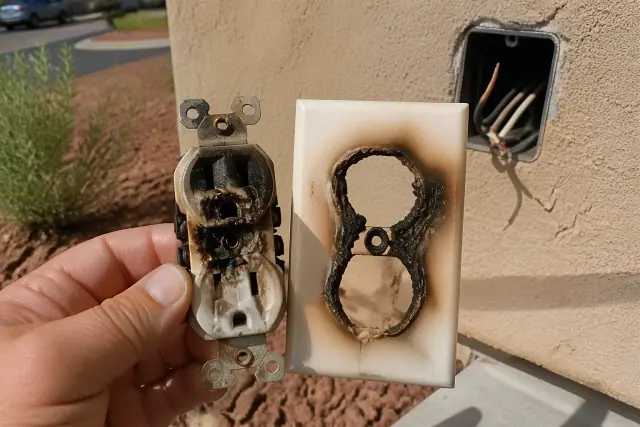
Dark discoloration, melted plastic, or a cover that feels hot shows that heat has already built at the connection. Shut off that circuit if it is safe to do so and arrange urgent inspection.
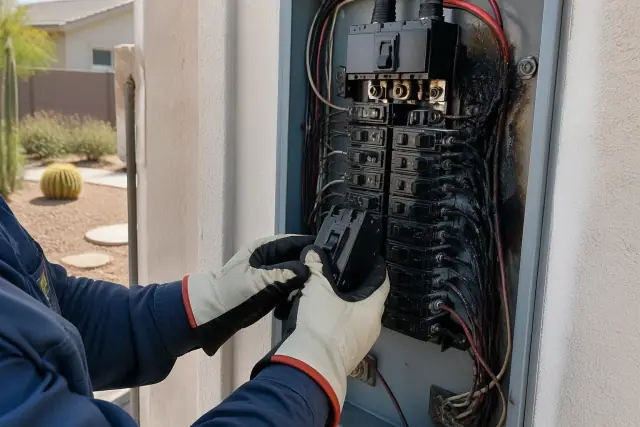
Compare one trip after a space heater and microwave run together with a breaker that trips again immediately after high-draw devices are unplugged. The repeated pattern is the one that points to a fault requiring troubleshooting.
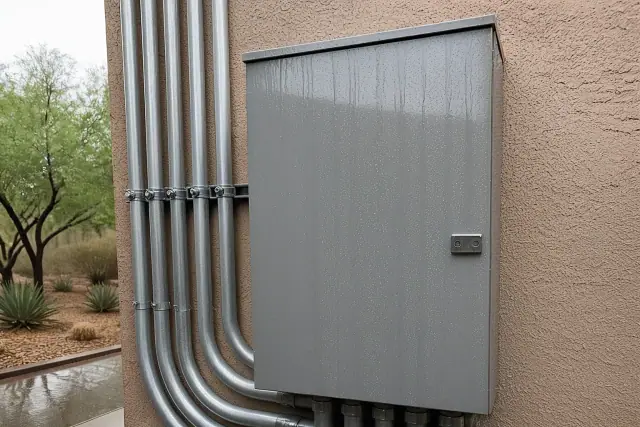
Moisture inside an exterior enclosure can create a shock hazard even when damage is not obvious. Do not touch the panel or attempt to dry electrical parts yourself.
From a safe distance, check for smoke, flame, sparks, heat, burning odor, buzzing, water contact, and whether the outage affects one circuit or the whole property.
The recommendation becomes more urgent when a symptom repeats, a component feels hot, an odor or buzzing accompanies the failure, water is present, or neighboring properties still have power during a complete outage.
Call now for fire or shock indicators, an immediately retripping breaker, or a whole-property outage that appears internal. Arrange scheduled service for an isolated dead outlet, loose switch, or brief flicker only when there is no heat, odor, buzzing, moisture, or visible damage.
Do not touch wet electrical equipment, keep resetting a breaker that trips immediately, use water on an electrical fire, or assume a stopped burning smell means the hazard is gone.
| What You Notice | Risk Level | What to Do |
|---|---|---|
| Active flame or visible smoke | Immediate fire danger | Evacuate and call 911 first. |
| Burning odor, sparks, scorch marks, buzzing, or a hot panel | Possible arcing or overheating | Shut off the affected circuit only if it is safe to reach, then call an electrician immediately. |
| Breaker trips once after a known overload | Often a manageable overload | Unplug the high-draw devices, reset once, and monitor. |
| Breaker trips again within minutes or immediately | Possible short, overload, or failed breaker | Stop resetting it and call for troubleshooting. |
| Wet outlet, damaged cord, or wet panel | Immediate shock danger | Do not touch it; shut off the main only if you can do so safely and call an electrician. |
| Whole property is dark while neighbors have power | Possible internal panel, main breaker, or service fault | Arrange prompt electrical troubleshooting. |
A single breaker trip after an identifiable overload, such as running a space heater and microwave together, can usually be handled by unplugging the extra load and resetting once. A flickering light in one room, one dead outlet, or a loose switch can generally wait for scheduled service when there is no heat, odor, buzzing, sparking, moisture, or repeated failure.
From May through September, air conditioners, pool pumps, and EV chargers can strain aging residential service on 100-plus-degree days; panels rated below 150 or 200 amps may be especially vulnerable to recurring overload. From June through September, haboobs and sudden downpours can drive moisture into poorly sealed exterior panels. Homes built before 1975 in Encanto, Sunnyslope, and Maryvale may also have aluminum wiring or undersized panels that increase concern when heat, buzzing, or repeated trips appear.
Emergency and after-hours work commonly runs 1.5 to 2 times a standard hourly electrician rate of about $75 to $150, with total emergency calls in most markets ranging from $150 to $600 depending on timing and fault complexity. Response time varies by metro location and call volume, with active fire hazards, sparking, and complete power loss taking priority. To reduce future risk, have a fuse box, ungrounded outlets, a panel older than 25 to 30 years, aluminum wiring from the late 1960s and 1970s, or older knob-and-tube wiring evaluated before a failure occurs at 2 a.m.; routine electrical work should follow National Electrical Code (NFPA 70) standards.
Describe the symptom, when it began, whether it repeats, and how much of the property has lost power. If there is active flame or visible smoke, evacuate and call 911 first; for sparking, heat, burning odors, water contact, or repeated breaker trips, keep clear of the hazard and call for electrical guidance.